
Dry stone walling and stone walls in Dolgellau
New dry stone walls, mortared stonework, block and render, stone cladding, and walls rebuilt after they’ve fallen or been knocked down. Built strong, and built to look as if they’ve always been there.
Dry stone or mortared?
Both are proper stone walls. Which one is right depends on where the wall stands and what it has to do.
Dry stone
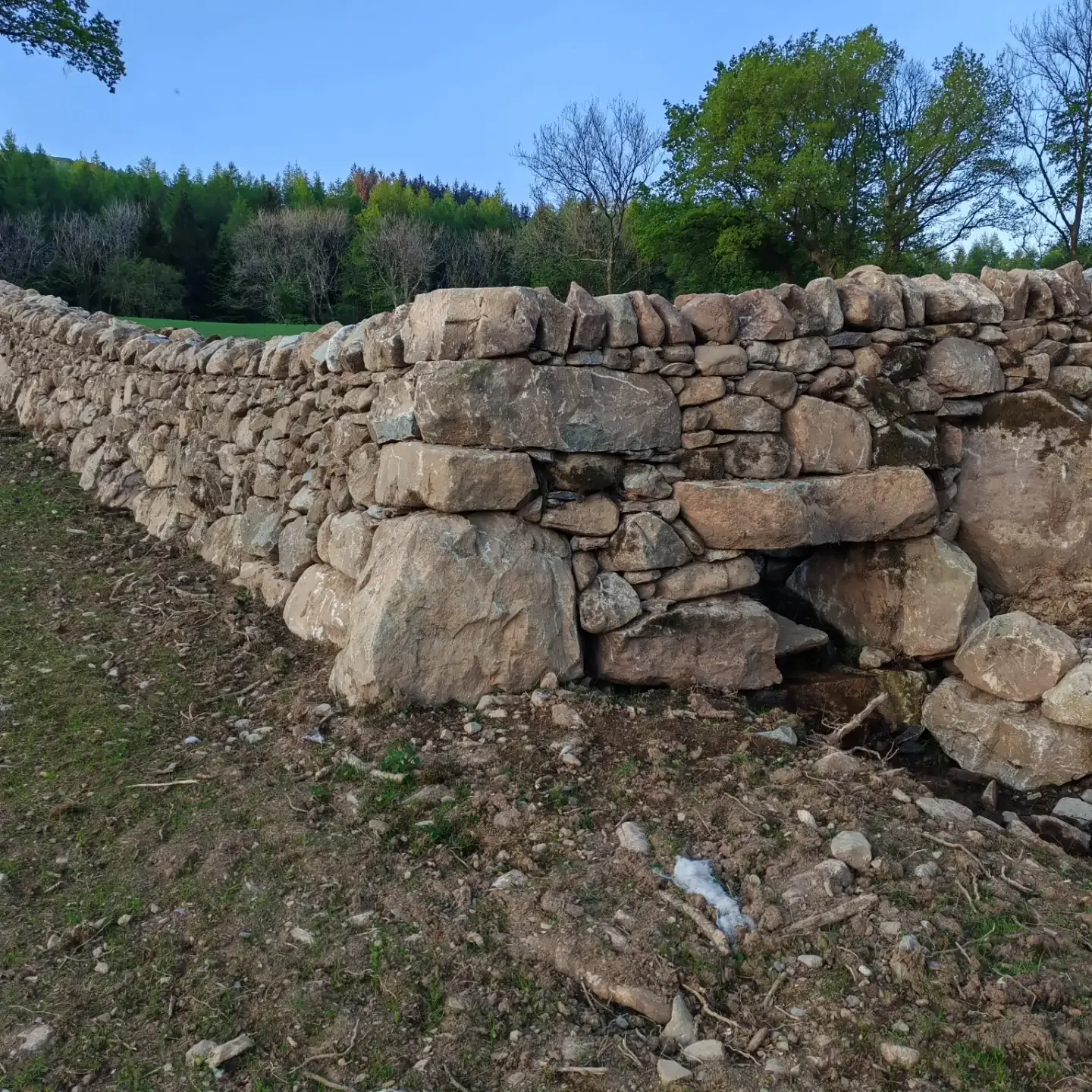
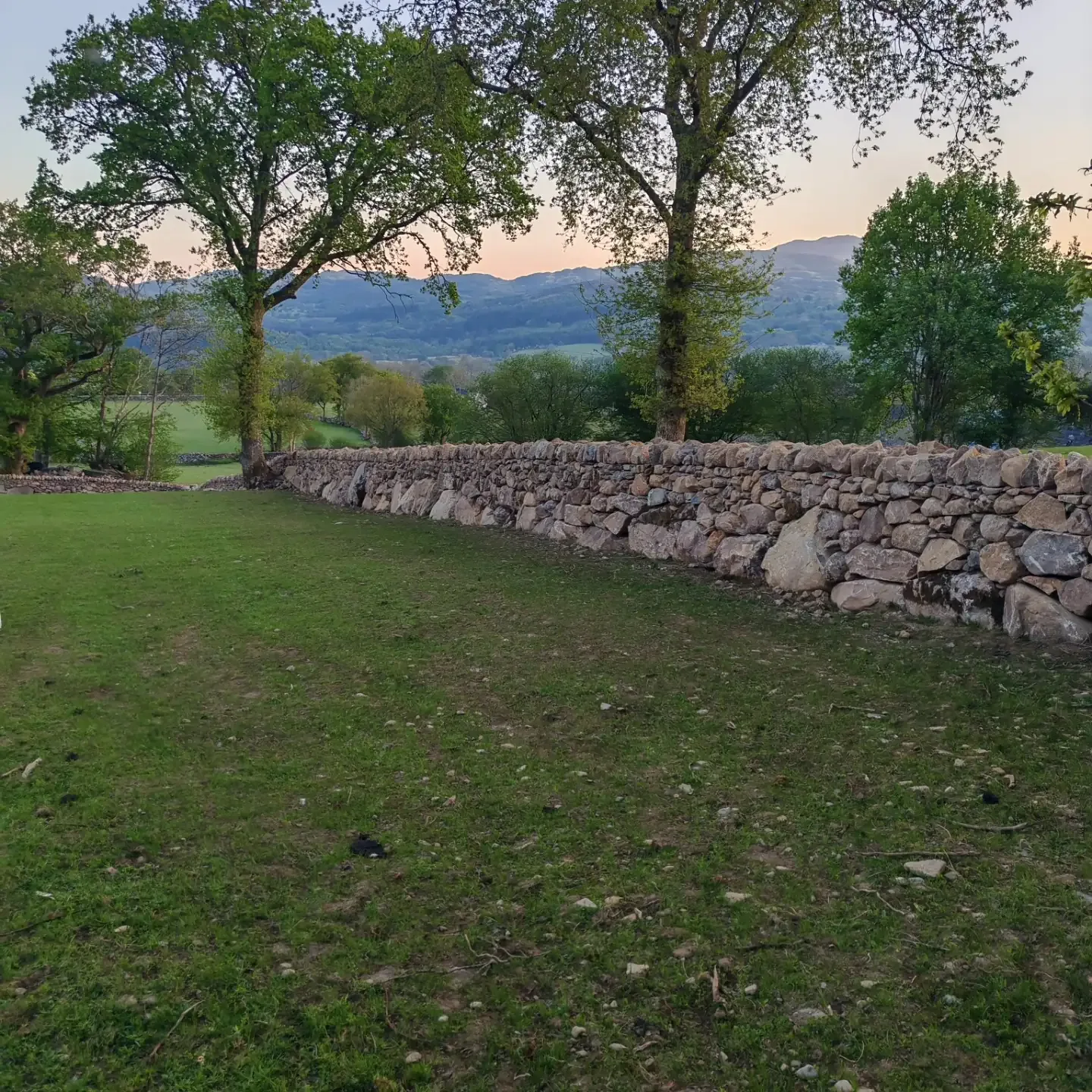
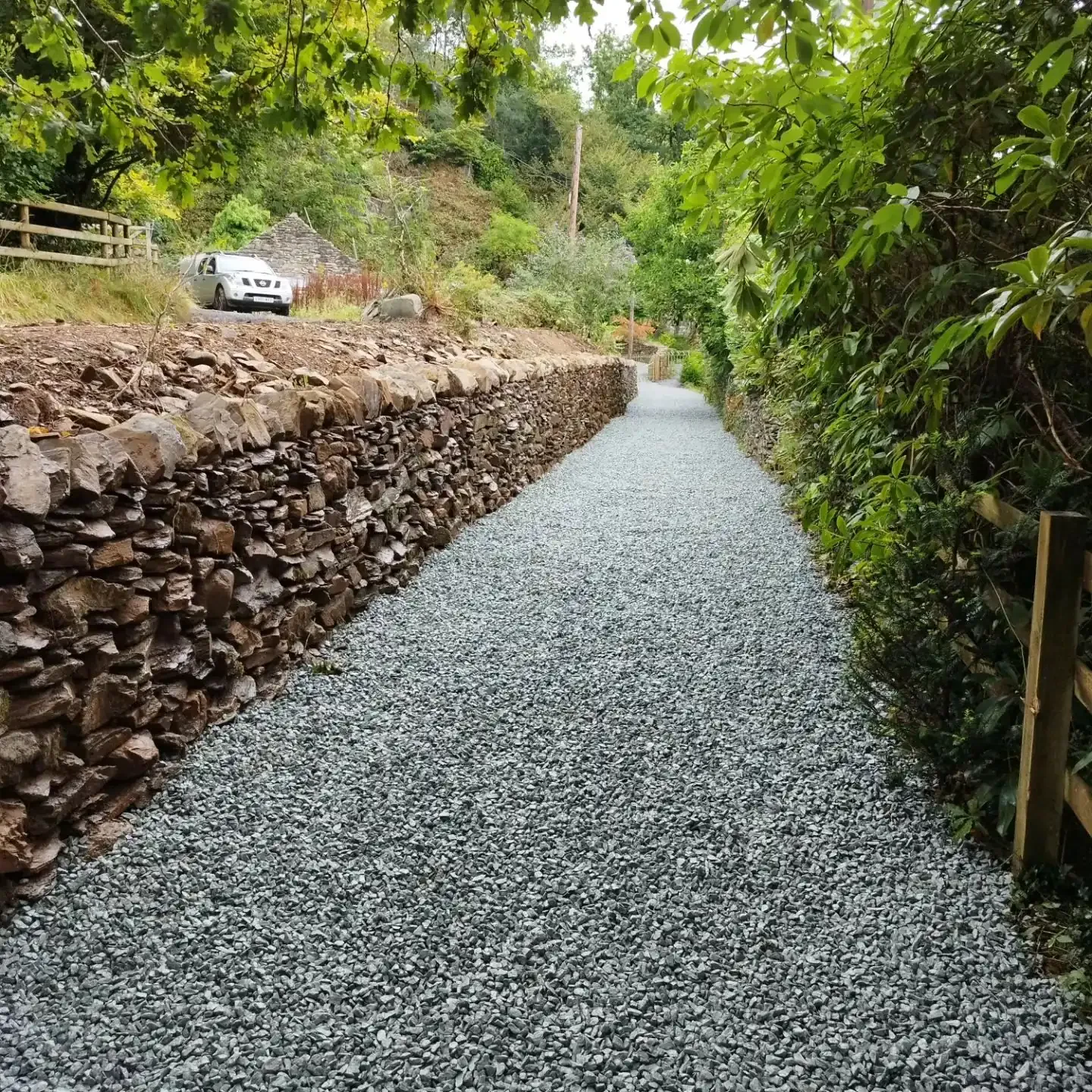
Built with no mortar at all. Each stone is chosen and placed so the weight holds the wall together: big footing stones at the bottom, two faces built up together, small stones packed into the middle, and a row of coping stones along the top.
It’s the wall of the fields and lanes round here. It moves a little with the ground instead of cracking, rain drains straight through it, and a section that gets knocked can be rebuilt with the same stone.
Suits
- Field and farm boundaries
- Lane and roadside walls
- Garden walls in a rural setting
Mortared stone
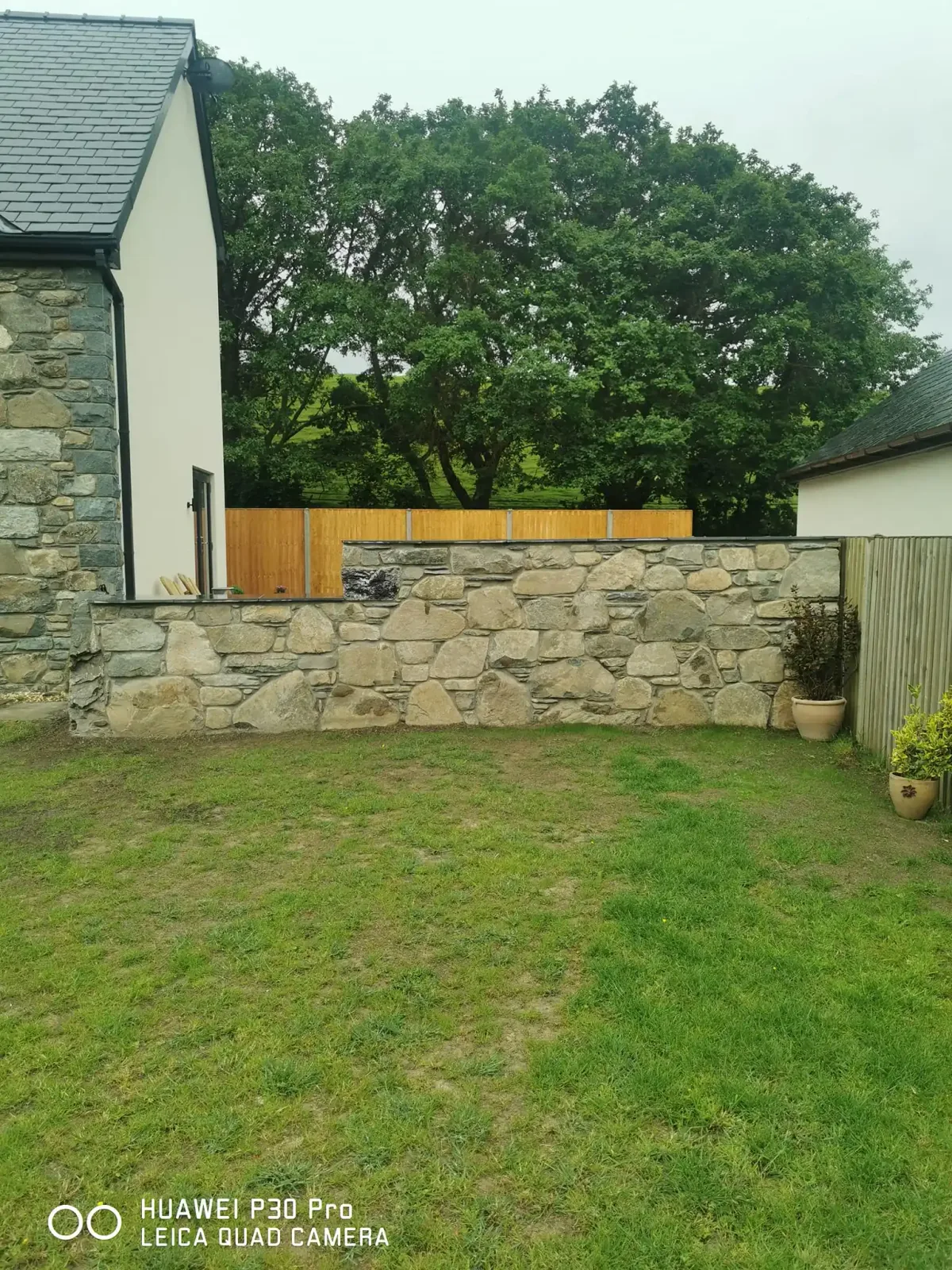
Stone laid on mortar, usually with a neat face and a stone or slate coping on top. It takes up less width than a dry stone wall of the same height, and gives a crisp, finished look close to a house.
Where a smooth finish suits better, a block wall with a rendered face does the same job, and it can be faced in stone cladding to match a building.
Suits
- Walls beside the house and patio
- Piers either side of a gate
- Raised beds and seating walls
Walls we’ve built

Rebuilding a fallen wall
Walls come down for all sorts of reasons: frost, tree roots, a bank slipping behind, or a vehicle going through. We take down whatever is unsafe, sort the stone, and rebuild the length that’s gone, using as much of the original stone as we can, so the repair sits in with the rest of the wall.
Fallen stone left lying soon gets buried in grass and moss, so the sooner a wall is sorted, the more of the original stone can go back in.
“Turned the devastation of a large vehicle destroying my garden wall into happiness of, dare I say it, even better than before! Had to wait till they had a ‘slot’ but work was completed quickly and tidily too!
Diolch Bois Bontnewydd!”
Walling questions
Where we build walls
In and around Dolgellau, from the coast at Barmouth to Trawsfynydd, Bala and Corris.
What’s the difference between a dry stone wall and a mortared wall?
A dry stone wall is held together by the weight and fit of the stones alone, with no mortar. A mortared wall is bedded on mortar, so it can be narrower and crisper. Dry stone suits fields, lanes and rural gardens; mortared stone suits walls next to houses, gate piers and raised beds.
Can you rebuild a wall that has fallen or been knocked down?
Yes. We take down anything that’s unsafe, sort the stone, and rebuild so the repair sits in with the rest of the wall.
Can you match the stone of my existing walls?
We always try. Stone round Dolgellau varies from one valley to the next, so we look at what’s already there, in colour, size and the way it’s laid, and work to match it.
Can you build a wall to hold back a bank?
Yes. A wall that holds back soil has to take the weight of the bank and the water in it, so it’s built with a wide, solid base and a way for water to get out from behind.
Do I need permission for a new wall?
Sometimes, depending on the height, where it is and whether it’s beside a road. Much of the area round Dolgellau is inside Eryri National Park, so if you’re unsure, check with the Eryri National Park Authority before work starts.
A wall to build or rebuild?
Tell us roughly how long and how high, and where it is. A photo of the stone already there helps. Quotes are free.